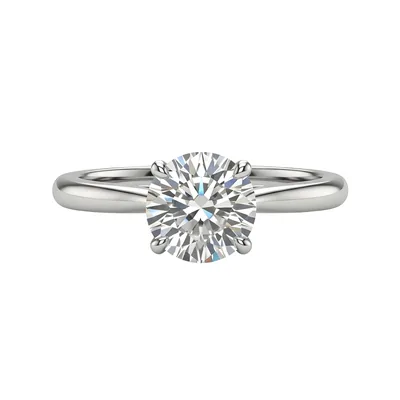
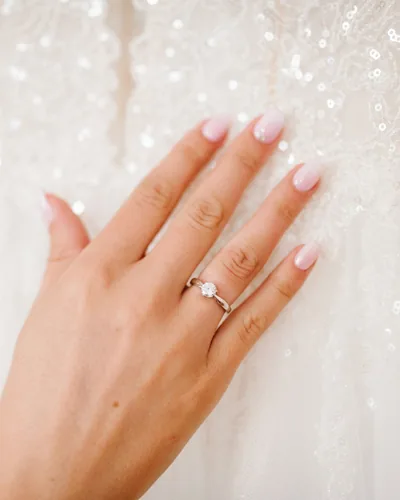
One diamond on a plain or lightly set band. The simplest ring we make, and the one where the center stone does all the talking.
Starting prices. Your final price depends on the diamond you choose.
Saved pieces wait for you on a tray in Suite 805. Viewings take about 45 minutes, by appointment.
No pieces match these filters. Clear the filters, or tell us what you have in mind and we will make it.
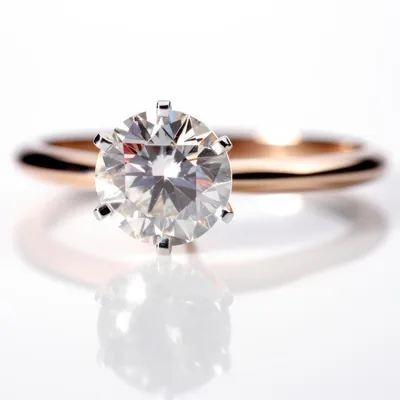
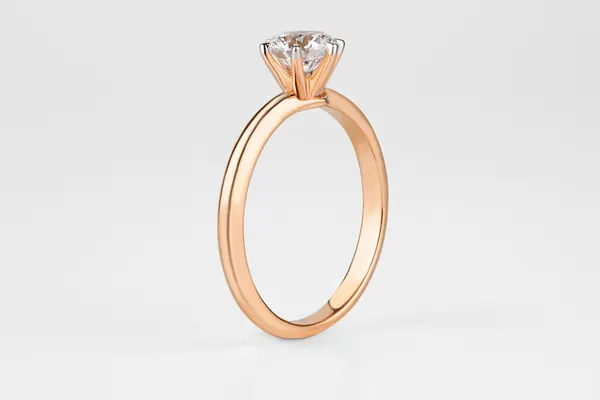
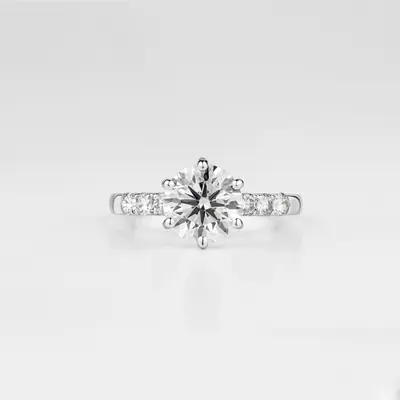
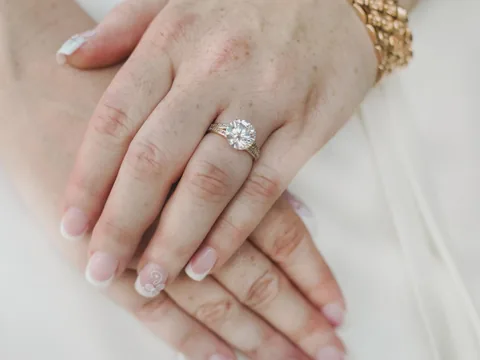
A solitaire is the ring most people picture when they think of an engagement ring. One diamond, held up by a few prongs, on a band. With nothing around it, the center stone gets all the attention, and the ring works with almost any wedding band you add later. Trends come and go. A well made solitaire still looks right decades on.
Because the design is so simple, the small details are what make one solitaire feel different from the next. These are the choices worth thinking about.
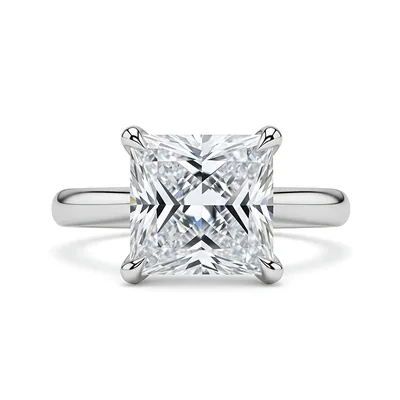
Four prongs show more of the diamond and let more light in. On a round stone they give a slightly square look from above. Six prongs hold the stone more securely and keep a round looking perfectly round. If one prong is ever damaged, the other five still hold the diamond. For elongated shapes like ovals, pears and marquise, prong count is chosen around the shape, with V prongs over any point.
Prong tips can be round, claw shaped or flat. Claw prongs look slim and modern. Round tips are the most comfortable and the least likely to snag on knits.
A thin band, around 1.6 to 1.8 mm, makes the center stone look larger by contrast. A slightly wider band, around 2 to 2.5 mm, feels sturdier and wears well over many years. You can also choose:
A cathedral setting lifts the stone on arches of metal from the band. It looks elegant and lets light reach the diamond. A low setting sits closer to the finger, snags less and is practical if you work with your hands. Think about how flat you want a wedding band to sit next to it, and bring that up at your viewing.
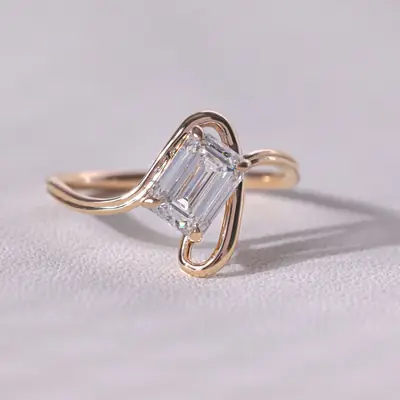
Any shape works. A round gives the most sparkle and the classic look. An oval faces up large and slims the finger. An emerald cut gives a quiet, architectural feel. Every solitaire on this page can be made with any center shape.
A solitaire puts the diamond on display, so it is the style where the center stone matters most. Focus on cut quality first. With lab grown pricing, you can often choose a bigger or better graded stone than you expected. Settings start from $990, and a 1 ct round center from about $640.
Try a four prong and a six prong version with the same stone, and a thin and a wider band. The differences are small on paper and obvious on the hand. Read the 4Cs for lab grown diamonds before you come, send your stone wishes through the loose diamond request, and book a viewing at 30 West 47th St, Suite 805. You can also call (732) 581-7932.
Viewings by appointment at 30 West 47th St, Suite 805. Saved pieces and requested stones wait on a tray for you.
Book a viewing (732) 581-7932A solitaire is simple by design, but details like a pave band, a hidden halo or claw prongs add character without crowding the stone.
There is no standard. Lab grown prices make 1.5 to 2 carats reachable for many budgets, but the right size is the one that looks right on your hand.
Often yes. A plain band can sometimes be pave set later, or you can add a diamond wedding band beside it. Ask us what your setting allows.
We set these aside on a tray for your viewing in Suite 805.