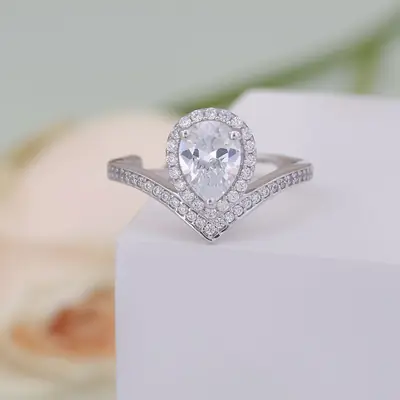
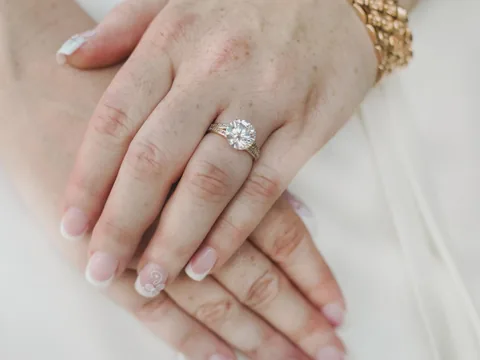
Round at one end and pointed at the other, the pear lengthens the finger and looks unlike anything else on the hand.
Starting prices. Your final price depends on the diamond you choose.
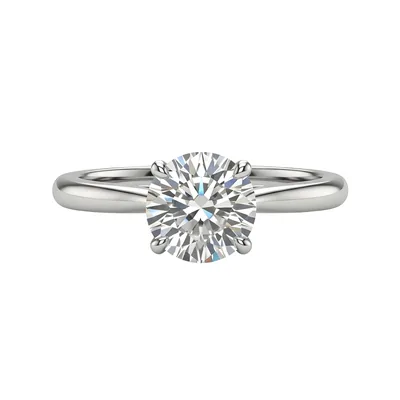
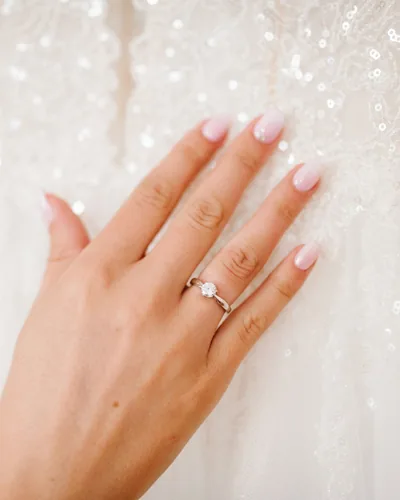 Made with a pear center
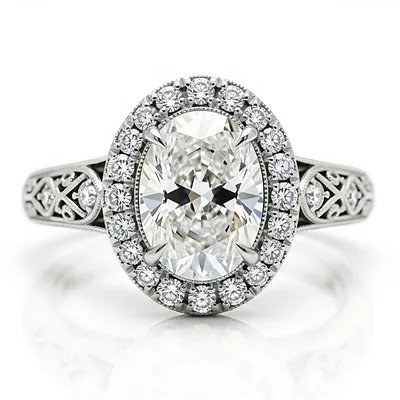 Made with a pear center
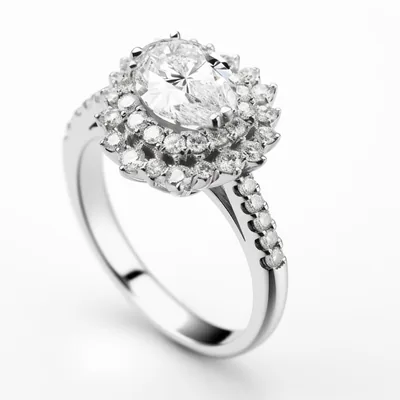
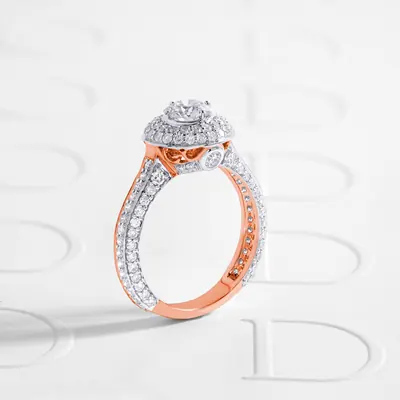 Made with a pear center
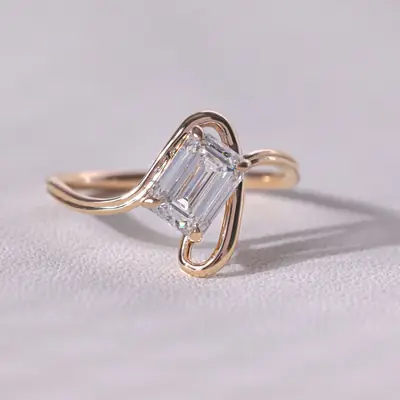 Made with a pear center
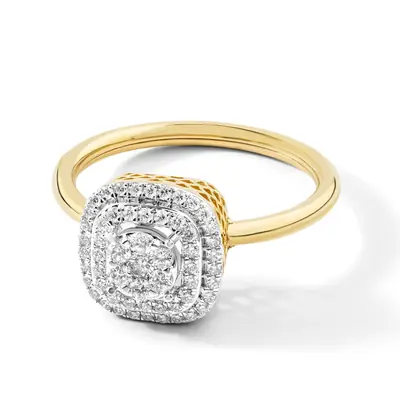 Made with a pear center
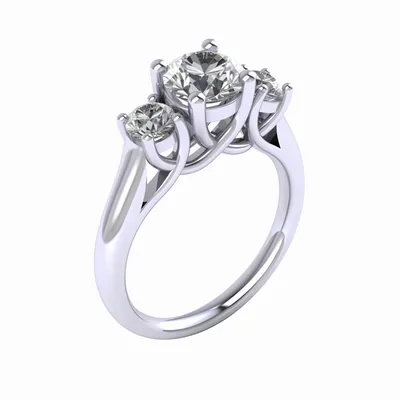 Made with a pear center
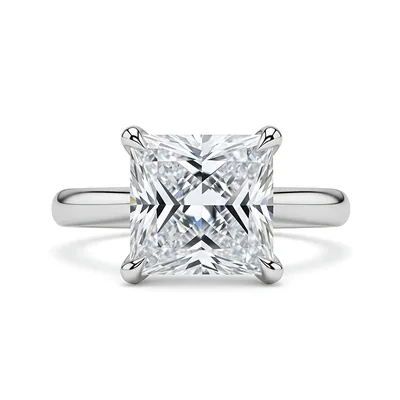
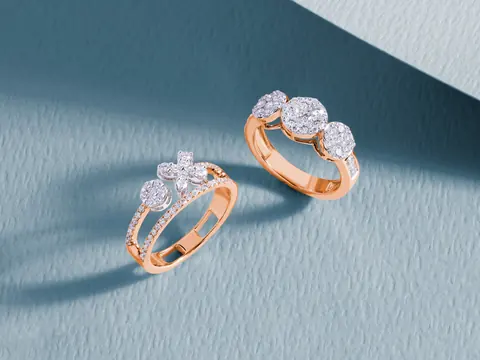 Made with a pear center
Saved pieces wait for you on a tray in Suite 805. Viewings take about 45 minutes, by appointment.
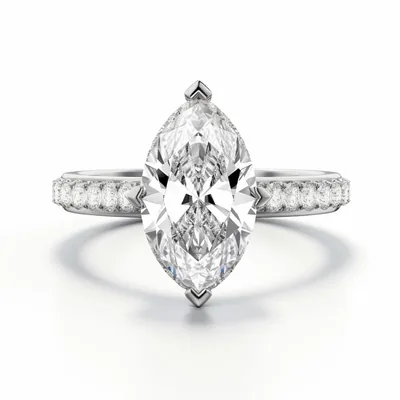
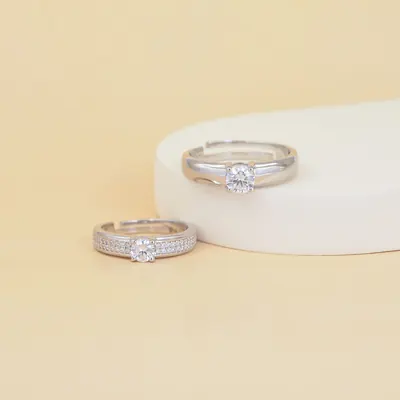 Made with a pear center
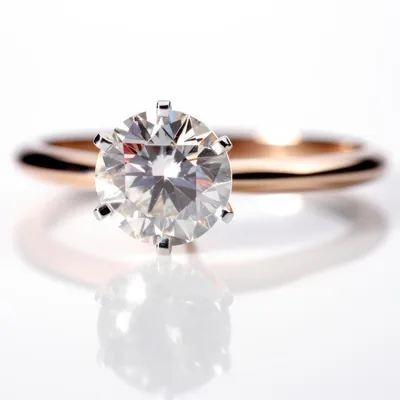
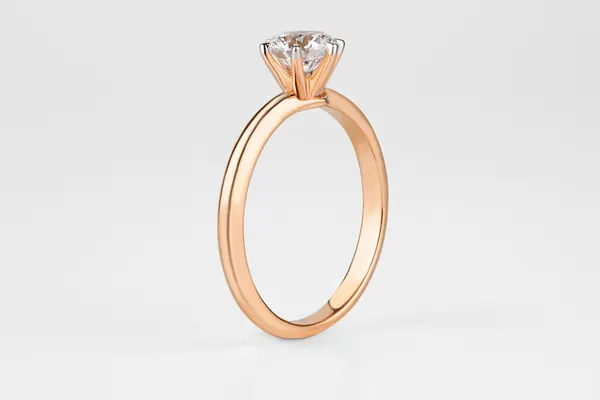 Made with a pear center
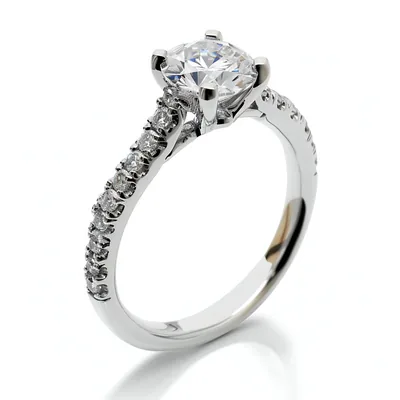 Made with a pear center
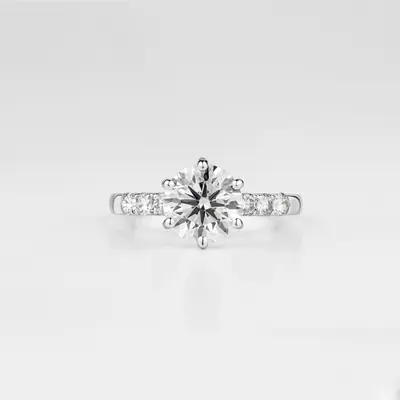 Made with a pear center
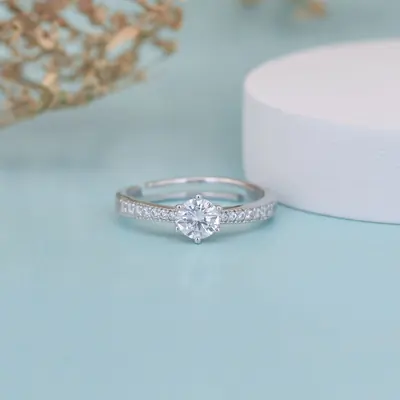 Made with a pear center
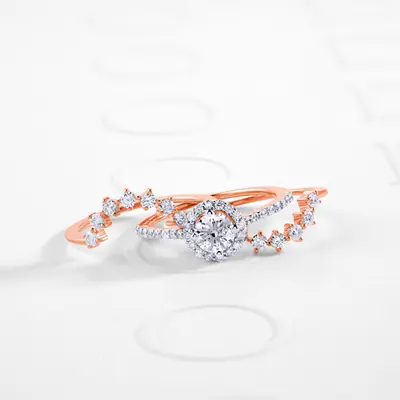 Made with a pear center
No pieces match these filters. Clear the filters, or tell us what you have in mind and we will make it.
A pear, sometimes called a teardrop, is rounded at one end and pointed at the other. It is a brilliant cut, so it sparkles well, and its long outline makes it look larger than a round of the same weight. It is also the only common shape that points somewhere, which gives a pear ring a feeling of movement other shapes do not have.
Traditionally the point faces toward the fingertip. That lengthens the finger and is how most pear rings are worn. Some people prefer the point toward the wrist, which looks softer and a little unusual. There is no rule. We will set the stone loosely in a setting on the tray so you can turn it and decide.
Most pears fall between 1.45 and 1.75. Around 1.55 to 1.65 is the classic teardrop. Lower ratios look short and wide, almost heart-like. Higher ratios are slim and elegant on a longer finger.
Draw an imaginary line from the point through the middle of the round end. Both halves should match. The shoulders, the curves just below the point, should be full and even. Flat or high shoulders make a pear look stiff. Narrow shoulders can make it look thin. The round end should be a smooth half circle, not squashed or stretched.
Pears show the same darker band across the middle that ovals and marquise stones do. A light, moving bow tie is normal. A heavy dark band that does not shift is worth avoiding, and you can only judge it by eye.
The point of a pear is its delicate spot. A V prong over the tip keeps it safe in daily wear. Most pear settings use five prongs: one V at the point and four along the round end, or three with a bezel tip. Every setting on this page can be made with a pear center, fitted with a V prong.
Color tends to collect in the point. In white gold or platinum, G or H keeps the tip looking bright. In rose or yellow gold you can drop a grade and let the metal warm the stone. Clarity is forgiving thanks to the brilliant facets. VS2 and many SI1 pears are eye clean, but avoid stones with an inclusion right at the tip.
Look at a few pears with different ratios side by side. Check the shoulders first, then tilt each stone for the bow tie. Try the point both ways on your finger. Most people decide on the direction before the stone.
Compare the pear with other shapes in our shapes guide. Tell us your size and budget on the loose diamond request page and we will have pears on the tray. Book a viewing at 30 West 47th St, Suite 805, or call (732) 581-7932.
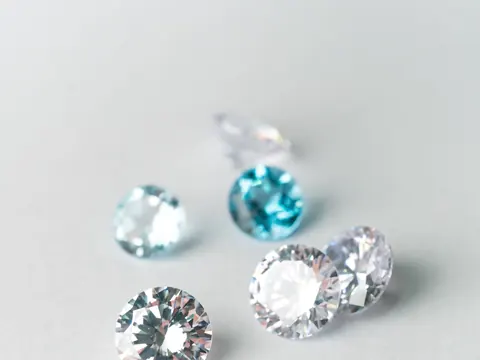
Viewings by appointment at 30 West 47th St, Suite 805. Saved pieces and requested stones wait on a tray for you.
Book a viewing (732) 581-7932Usually yes. Its long outline spreads the carat weight over more length, so it tends to look larger from above.
Sometimes, depending on how low the stone sits. A curved or contour band is a common choice. Bring your ideas to the viewing and we will check the fit.
Yes. A loose pear can be reset into a pendant or another ring. Ask us when you are ready.
We set these aside on a tray for your viewing in Suite 805.