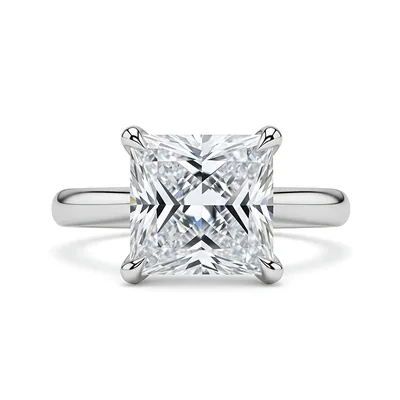
A square brilliant with sharp corners and a lot of sparkle. It gives you more visible diamond per dollar than many shapes, as long as the corners are protected.
Starting prices. Your final price depends on the diamond you choose.
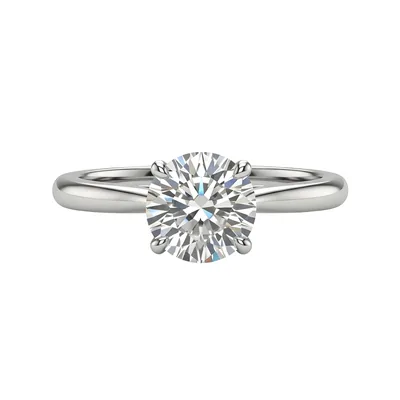
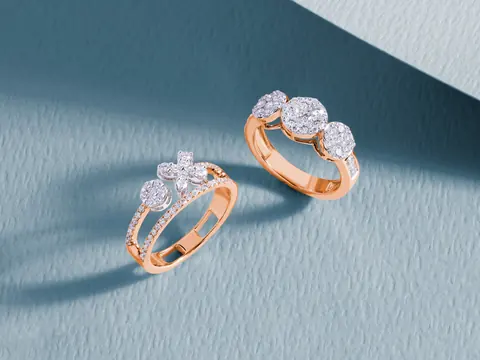
 Made with a princess center
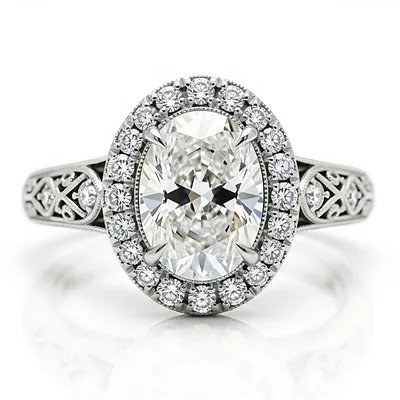
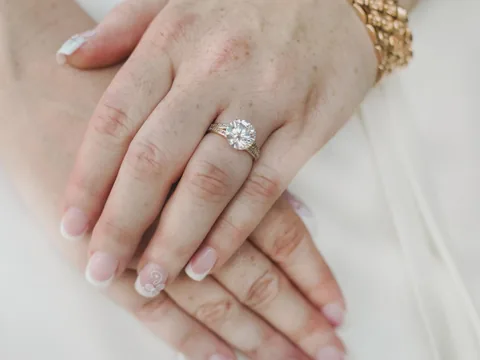 Made with a princess center
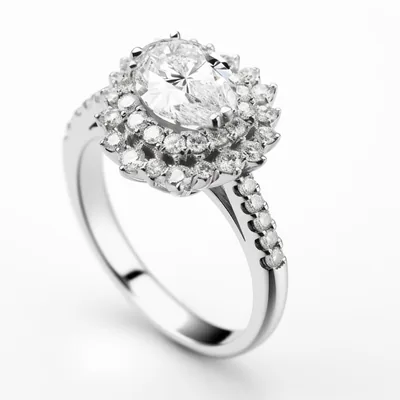
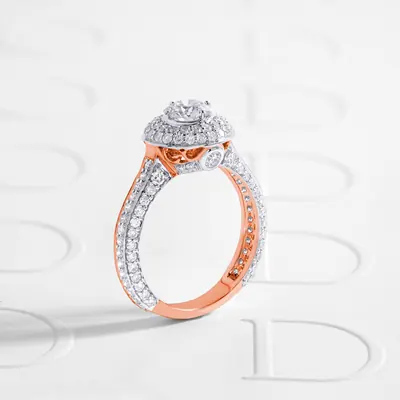 Made with a princess center
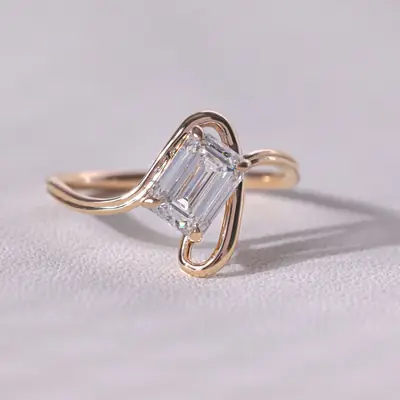 Made with a princess center
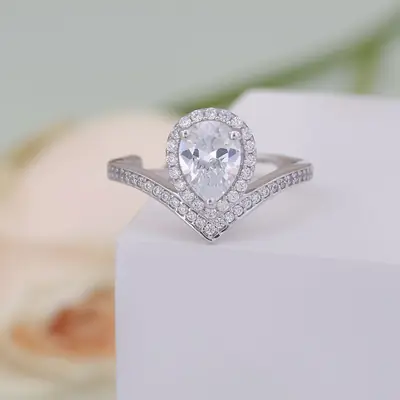 Made with a princess center
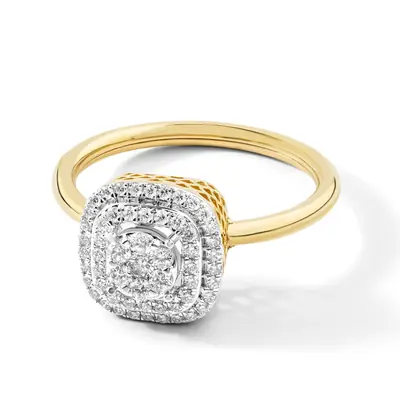 Made with a princess center
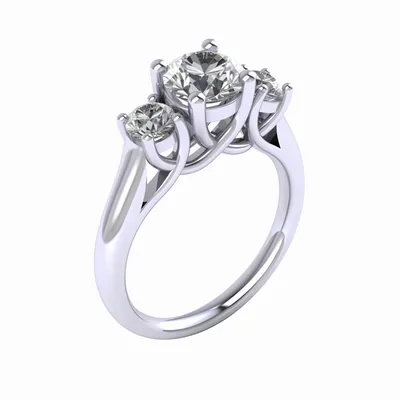 Made with a princess center
Saved pieces wait for you on a tray in Suite 805. Viewings take about 45 minutes, by appointment.
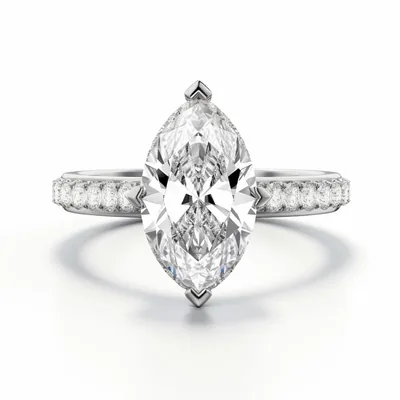
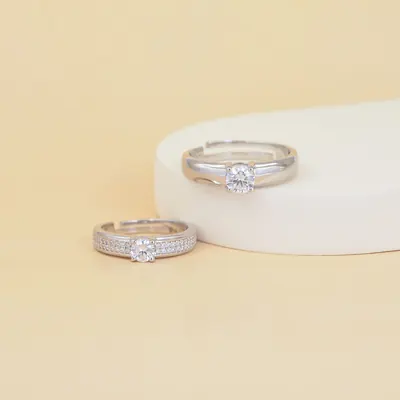 Made with a princess center
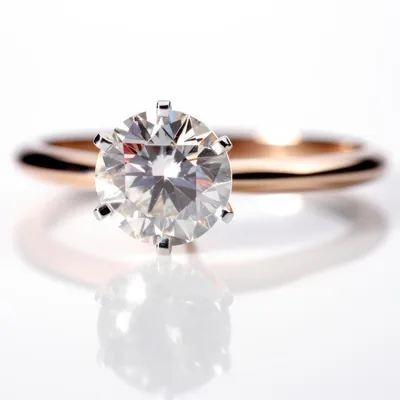
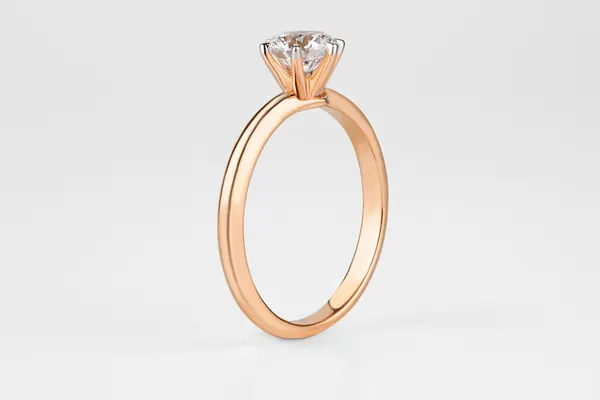 Made with a princess center
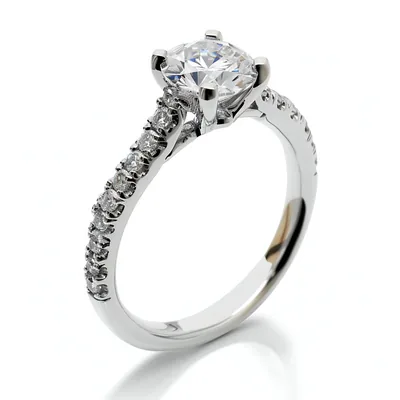 Made with a princess center
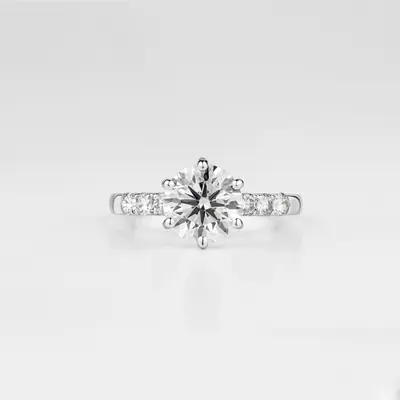 Made with a princess center
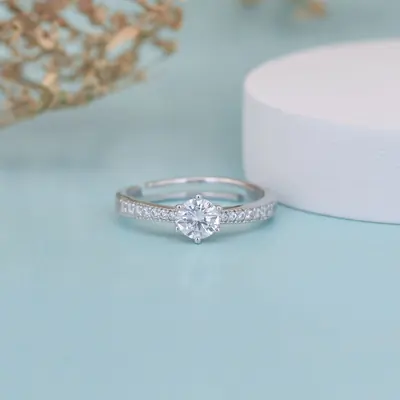 Made with a princess center
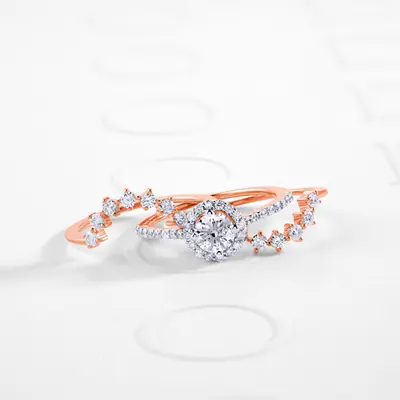 Made with a princess center
No pieces match these filters. Clear the filters, or tell us what you have in mind and we will make it.
The princess cut is a square or nearly square brilliant. Seen from the side it looks like an upside down pyramid. Its facets are arranged to throw lively, crossing flashes of light, so it sparkles almost as much as a round while giving a crisp, modern outline. It also tends to be good value, because cutters waste less of the rough crystal making a square stone.
Most people want a princess that looks square. A length to width ratio between 1.00 and 1.05 reads as square to the eye. Up to about 1.10 starts to look slightly rectangular, which some people prefer. Measure it on the report, then confirm by eye.
Princess cuts are deeper than rounds. A total depth of roughly 64 to 75 percent is common, with a table around 67 to 75 percent. Too deep and the stone hides its weight in the bottom and looks small. Too shallow and it can look glassy, with dark corners. If two stones have the same weight, the one that measures larger across the top usually gives you more visible diamond.
Look at all four corners under magnification. They should be sharp, even and free of nicks. A chip on a corner is the most common damage to a princess, and it often happens before the stone is ever set if it was handled carelessly. We check this before any stone reaches your tray.
The pointed corners are the delicate part. Choose a setting with V prongs, also called chevron prongs, that wrap each corner. Every setting on this page can be made with a princess center, and we fit corner prongs on all of them. A bezel or a halo also shields the edges well if you work with your hands.
Like other square shapes, a princess can show a little color in the corners. In white gold or platinum, G or H is a sensible range. The busy brilliant faceting hides inclusions well, so VS2 or a clean SI1 is usually eye clean. Check that no inclusion sits right at a corner, since that can make the tip more likely to chip.
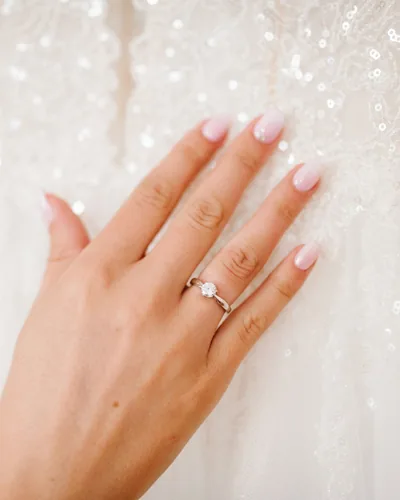
A princess cut measures a little smaller across than a round of the same weight, because so much depth sits below the girdle. Its square corners cover more of the finger, though, so on the hand it often looks similar in size. Set in a halo, a princess can look a full size larger.
Ask to see a princess next to a radiant and a cushion of similar weight. All three are square-ish, and seeing them side by side quickly shows you which outline you like. Then look at the corners under the loupe with us.
Our shapes guide compares all eight shapes. Send your size and budget through the loose diamond request and book a viewing in Suite 805, or call (732) 581-7932.
Viewings by appointment at 30 West 47th St, Suite 805. Saved pieces and requested stones wait on a tray for you.
Book a viewing (732) 581-7932Yes, if the corners are protected. Choose V prongs, a bezel or a halo, and have the prongs checked from time to time.
Yes. Turned 45 degrees it becomes a kite shape on the finger. Ask to see it both ways at your viewing.
Per carat it often does, because less of the crystal is lost when it is cut. Your exact price depends on the stone you choose.
We set these aside on a tray for your viewing in Suite 805.