Why seeing the stone matters
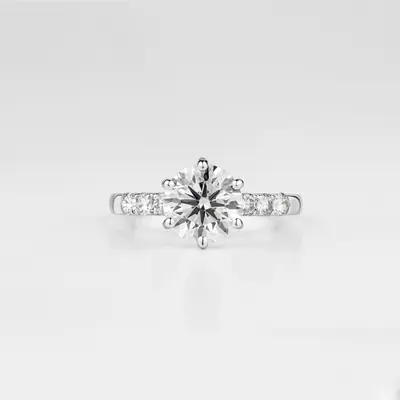
Online diamond photos are taken in a light box. The stone sits still, the light is perfect and the camera is set to make it glow. That is useful for a first look, but it is not how a ring lives on your hand.
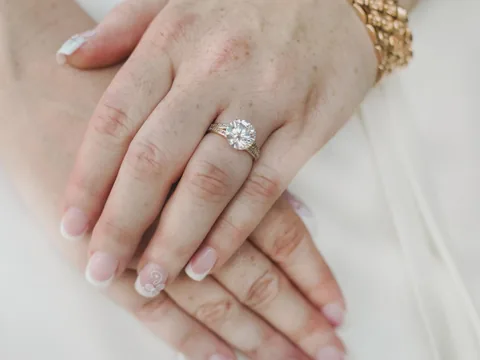
In person you see the diamond move. You see how it handles a window, a desk lamp and the shade of your own palm. You see how big it looks on your finger, which is often different from what the carat number suggested. Two stones with nearly the same report can look surprisingly different side by side. One may look lively and bright. The other may look a little sleepy. Only your eyes can tell you which one you prefer.
A viewing also lets you ask questions as they come up, instead of guessing from a product page. That is why we show every stone in person at our showroom on West 47th Street.
Before you come in
A little planning makes the visit calm and useful. You do not need to be an expert. You only need a rough idea of three things.
- A budget range. A comfortable number and a stretch number. It helps us pull stones that make sense, and it keeps the visit relaxed.
- A shape or two. If you are not sure, read our guide to lab diamond shapes and pick two that catch your eye. We can show others on the day.
- The ring style. A plain solitaire, a halo, three stones? Browse our lab grown engagement rings and save the settings you like with the heart.
If you already know the details, use our loose diamond request. Tell us shape, carat range, color, clarity and budget, and we pull three to five matching stones so they are waiting on a tray when you arrive.
What to look at first
Start with your eyes, not the paperwork. Hold each stone, or the ring, at arm's length and at reading distance. Ask yourself a few simple questions.
- Does it look bright across the whole face, or are there dark patches?
- When you tilt it, do you see lively flashes of white and color?
- Does the outline look even and balanced to you?
- Does the size feel right on the hand, not just on the tray?
Brightness and sparkle come mostly from cut. A well cut stone returns light to your eye. A poorly cut stone leaks it out the back and can look glassy or dark in the middle. This is the single biggest visible difference between diamonds, and it is easy to see once two stones sit next to each other.
Compare side by side
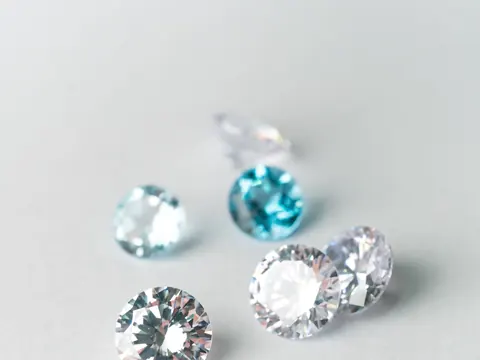
Looking at one diamond on its own tells you very little. Our eyes are bad at judging in isolation and good at comparing. That is why we put stones next to each other on a white tray.
Line up two or three that fit your brief. Swap their positions now and then, because the stone in the middle often gets the best light. Look at them face up, then turn the tray slightly. Take a step back. Often one stone keeps pulling your eye. That is usually your answer, whatever the report says.
Then compare the near misses. If a G color and an F color look the same to you on the tray, the cheaper one is the smart choice. If a slightly smaller stone looks brighter than a bigger one, you may prefer the smaller one on your hand. These are the trade offs that a screen hides.
Use the loupe, then put it down
We will hand you a 10x loupe. It is the standard jeweler's magnifier, and clarity grades are based on what can be seen at that power. Hold it close to your eye, bring the stone up until it comes into focus, and look for small crystals, feathers or clouds.
It is interesting, and it helps you understand the report. But remember that nobody wears a ring under a loupe. For most people, a stone that looks clean to the naked eye at normal distance is the goal. If you cannot find an inclusion without help, it will not bother you at dinner. Our guide to the 4Cs for lab grown diamonds explains which grades you can see and which you cannot.
Check the report and the stone together
Every center stone we show comes with an independent grading report, usually from IGI or GIA. The report lists the shape, measurements, carat weight, color, clarity and, for many stones, cut, polish and symmetry. It also states that the diamond is laboratory grown.
Ask to see the laser inscription. Most graded lab diamonds carry the report number written in tiny letters on the girdle, the thin outer edge. Under magnification you can read it and match it to the paper. You can also enter the report number on the grading lab's website and confirm the details. Our guide to IGI vs GIA reports walks through each line.
If anything on the report does not match what you see, ask. A good viewing is one where you leave with no loose questions.
Try it in the setting
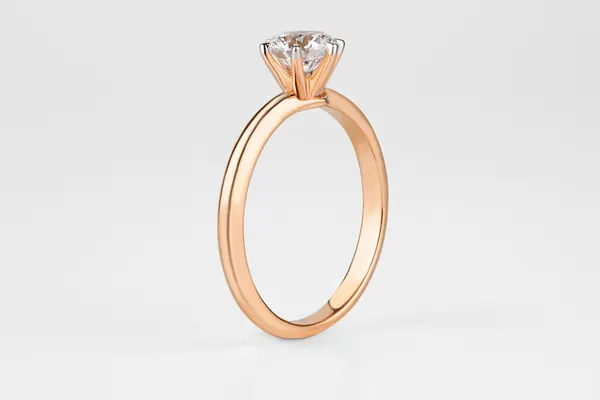
A loose diamond on a tray looks different once it sits in metal. Prongs frame it. A halo makes it look larger. Yellow gold can warm up a slightly tinted stone, and that can let you save on color. Platinum and white gold suit the whitest stones.
Try the setting on with the stone held in place, or try a sample setting with a similar center. Look at it from the side as well as from above. Check how high it sits, whether it catches on a sweater, and how it lines up with a wedding band if you plan to wear one. Our wedding bands can be tried at the same visit.
Questions worth asking
- What is the full price of this stone in this setting, in this metal?
- How long will the finished ring take?
- Can I see the report number on the stone itself?
- What happens if the ring size needs changing later?
- How should I clean it and how often should the prongs be checked?
There are no silly questions. We would much rather explain something twice than have you go home unsure.
Take your time
A viewing is not a sale. Nothing is charged online, and nothing has to be decided on the day. Some people choose in twenty minutes. Others come back with a partner or a friend for a second look. Both are fine.
If you would like to see stones in person, book a viewing at 30 West 47th St, Suite 805, or call us at (732) 581-7932. Viewings are by appointment, and we are a short walk from the B, D, F and M trains at 47-50 Sts Rockefeller Center.