Why shape matters more than most people expect
Most buyers start with carat weight. Shape ends up deciding more. It sets how the stone returns light, how large it looks from above, how it sits on the finger and which settings make sense. Two lab grown diamonds of the same weight and grade can look like different sizes once they are cut into different shapes.
There is no best shape. There is the one you keep looking at. The notes below explain what each shape does well, what to check on its grading report, and where to see rings made with it. When you come in, we lay several shapes side by side on the tray, because that comparison settles the question faster than any photo.
Brilliant cuts and step cuts
Almost every shape falls into one of two families.
- Brilliant cuts have many triangular and kite shaped facets. They break light into lots of small, quick flashes. Round, oval, pear, marquise, princess, radiant and cushion are all brilliant styles.
- Step cuts have long, flat facets in rows, like stairs. They give broad flashes and a clear, glassy look. The emerald cut is the classic example.
Brilliants hide small inclusions and slight color well. Step cuts show the inside of the stone plainly, so clarity and color matter more. Keep that in mind as you read on.
Round
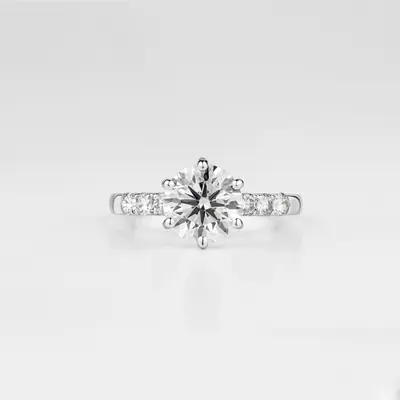
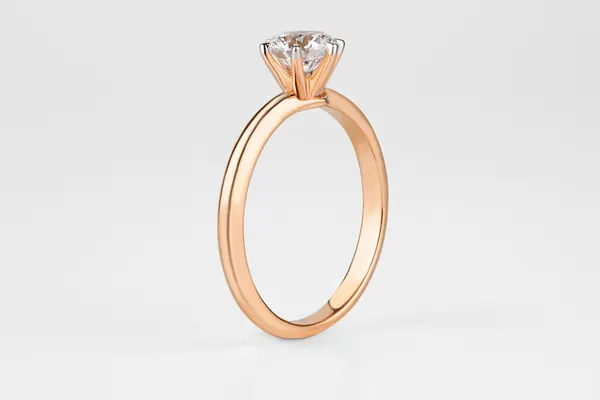
The round brilliant is cut to return as much light as possible. It is the only shape with a cut grade on most reports, which makes comparing stones simpler. It suits every setting, from a plain solitaire to a halo, and it is the most forgiving shape in color.
Check: the cut grade. Aim for Excellent or Ideal. A well cut round with slightly lower color often looks better than a poorly cut round with top color.
See round lab grown engagement rings.
Oval
An oval has the fire of a round in a longer outline. It spreads more of its weight across the top, so it tends to look larger than a round of the same carat. The length also flatters the finger.
Check: the length to width ratio, usually between 1.35 and 1.50. Look for the bow tie, a dark band across the middle that most ovals show to some degree. A faint one is normal. A heavy one you notice from across the table is worth passing on.
See oval lab grown engagement rings.
Emerald
The emerald cut is a rectangle with cut corners and step facets. It does not sparkle like a brilliant. It flashes in calm, wide planes, almost like looking into still water. People who love it tend to love it a lot.
Check: clarity first. The open facets show inclusions, so VS2 or better is a sensible floor. Color can show at the corners too. A ratio around 1.40 to 1.50 gives the classic look.
See emerald cut lab grown engagement rings.
Cushion
A cushion is a square or slightly rectangular stone with rounded corners, like a pillow. Some cushions have chunky facets that throw big flashes of light. Others have finer facets that look crushed and glittery. Reports often do not name the difference, so you need to see it.
Check: the outline you prefer, square or elongated, and the faceting style. This is one of the shapes where seeing three or four stones side by side helps the most.
See cushion cut lab grown engagement rings.
Pear
A pear is round at one end and pointed at the other. It lengthens the hand and looks soft and distinctive. Most people wear the point toward the fingertip, but either way is fine.
Check: symmetry. The two sides should mirror each other and the rounded end should be full, not flat. The point needs a prong or a V tip to protect it. A ratio around 1.45 to 1.75 covers most tastes.
See pear shaped lab grown engagement rings.
Radiant
A radiant has the trimmed corners of an emerald cut with brilliant faceting inside. So you get the clean outline and a lot of sparkle. It comes square or elongated and is good at hiding small inclusions.
Check: the ratio you want and how evenly the stone sparkles across its face. Some radiants are cut deep, which makes them look smaller from above for their weight. The measurements on the report tell you this.
See radiant cut lab grown engagement rings.
Princess
The princess is a square brilliant with sharp corners. It is crisp and modern and returns a lot of light. Because the shape keeps more of the rough crystal, it often gives you more visible diamond for the money.
Check: the corners. They are the weak point, so the setting should hold each one with a prong. Make sure the stone looks square to your eye, around 1.00 to 1.05.
See princess cut lab grown engagement rings.
Marquise
The marquise is long with a point at each end. It has more surface area than almost any other shape for its weight, so it reads large. It has a vintage feel and looks striking set straight or turned on the band.
Check: symmetry and the bow tie, as with the oval. Both tips need protection. A ratio around 1.85 to 2.10 gives the classic shape.
See marquise lab grown engagement rings.
How shape changes the look of size
Elongated shapes such as marquise, oval and pear usually look the biggest from above at a given weight. Round, princess and cushion sit more compact. Emerald and radiant fall in between, depending on how deep they are cut. If you have a set budget and want the most visible size, an elongated shape is a smart place to start.
Matching shape to setting and lifestyle
- If you work with your hands, softer shapes like round, oval and cushion have no sharp points to knock.
- Pointed shapes such as pear, marquise and princess need protected tips or corners.
- A halo makes almost any shape look larger. A solitaire lets the shape speak for itself.
- Two different shapes side by side work well in a toi et moi ring.
See the shapes in person
Shapes are hard to judge from a phone screen, because photos flatten depth and hide the bow tie. The easiest way is to compare real stones. Use our loose diamond request to name two or three shapes, a carat range and a budget, and we will have them on the tray when you arrive. For the grading side, read the 4Cs for lab grown diamonds, then book a viewing at 30 West 47th St, Suite 805.